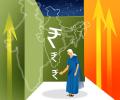
S&P Global Ratings on Tuesday upped India's GDP growth forecast for the current fiscal to 6.5 per cent, citing lower crude prices, monetary easing and normal monsoon, and said the ongoing geopolitical tensions are unlikely to put a "significant pressure" on the rupee or inflation.

Non-banking financial company (NBFC) Tata Capital is set to launch its much-anticipated $2 billion (Rs 17,200 crore) initial public offering (IPO) in the week beginning September 22, market sources familiar with the matter said on Sunday. The issue is expected to value the company around $11 billion, they added. Tata Capital is likely to make its stock market debut by September 30.

Tata Motors on Friday reported a 62.2 per cent decline in consolidated net profit to Rs 4,003 crore in the June quarter, impacted by volume decline across segments, drop in JLR profits due to US tariffs and high base effect due to gain from sale of discontinued operations. The auto major had posted a consolidated net profit of Rs 10,587 crore in the April-June quarter of the previous fiscal, Tata Motors Ltd (TML) said in a regulatory filing.
Here is a list of Q & As to explain these issues and implications of the US move.

The government has no say in where the country's refiners source oil from because these are commercial transactions.

If India caves in to US pressure as Trump hopes it will, he will further try to blackmail it into submission, points out Ramesh Menon.

Indian equity benchmarks rose nearly 2 per cent on Thursday, capping a truncated trading week with their strongest weekly performance in over four years. The rally was sparked by renewed risk-on sentiment following progress in trade negotiations and expanded tariff exemptions.
Trump may temper his approach from time to time, but to think that he will change his basic philosophy is delusional, asserts T T Ram Mohan.
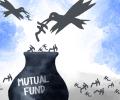
The Rs 84,000 crore domestic fund of funds (FoFs) space, which was in the doldrums over the past 18 months, has now caught the attention of investors due to a change in the tax structure in Budget 2024. The broader category, which includes offerings across equity, debt and commodities, has seen a spike in the inflows over the past two months. FoFs typically deploy the pooled capital in one or multiple MF schemes rather than investing directly into equities, debt or commodities.

While the economy will wait for a rate cut in December, the banking industry should be happy with the wave of liberalisation -- a big push for growth in bank credit, points out Tamal Bandyopadhyay.

'Increasingly, they treat gold as a financial asset in their portfolio rather than just as jewellery.'

The World Bank on Wednesday lowered India's growth forecast for the current fiscal by 4 percentage points to 6.3 per cent amid global economic weakness and policy uncertainty. In its previous estimate, the World Bank had projected India's growth at 6.7 per cent for the fiscal year 2025-26.

Benchmark stock indices Sensex and Nifty rebounded on Thursday after two days of decline, mirroring a rally in global markets as a US court blocked President Donald Trump's reciprocal tariffs. The 30-share BSE Sensex climbed 320.70 points or 0.39 per cent to settle at 81,633.02.

Foreign investors continue to pull back money from the Indian equity market, withdrawing Rs 24,753 crore (about $2.8 billion) in the first week of March amid escalating global trade tensions and lacklustre corporate earnings.

The next generation GST reforms would 'absolutely' set an economy open and transparent with further reduction in compliance burden and benefiting small businesses, Union Finance Minister Nirmala Sitharaman said on Tuesday.

'From tariff tensions and border skirmishes to unrest in West Asia.' 'The worst may be behind us. But any further upmove will now have to come from earnings.'

The new excise policy, introduced in Delhi in November 2021, made sweeping changes to the city's liquor trade.
Industry associations and companies in the United States, including the US Chamber of Commerce, Coalition of Services Industries and the iconic bike company Harley Davidson have called on the Donald Trump dispensation to push India to reduce tariffs, non-tariffs, and regulatory barriers to boost American exports.

March 31 marked 10 years since the Modi government introduced its first Foreign Trade Policy (FTP 2015-20) that lasted for 8 years before the current FTP 2023 came in. Here is a brief assessment. In 2015, the government said that it aims to increase India's exports of merchandise and services from $465.9 billion in 2013-14 to approximately $900 billion by 2019-20 and to raise India's share in world exports from 2 per cent to 3.5 per cent.

'Even if India is attractive, FPIs currently lack the funds to invest, as money is being redirected to the US.'

If pharmaceutical exports from India to the US come under a 25 per cent tariff bracket, the impact on earnings before interest, tax, depreciation and amortisation (Ebitda) could be around 5 per cent, felt analysts. This is after assuming that about 75 per cent of the tariff would be passed on.

Tata Motors (TaMo) is aiming to gain market share across its passenger vehicle (PV) and commercial vehicle (CV) businesses - targeting a 40 per cent share in CVs and a 16 per cent share in PVs by 2027. Meanwhile, it has already achieved earnings before interest, tax, depreciation, and amortisation (Ebitda) breakeven in its electric vehicle (EV) business at 1.2 per cent (up 830 basis points), ahead of its target of 2025-26 (FY26).

Geopolitical tensions, trade policy uncertainties, volatility in international commodity prices and financial market uncertainties pose considerable risks to India's economic growth in the coming year, the finance ministry cautioned on Wednesday. "Global trade continues to be affected by uncertainty in the policy environment... tariff-related developments in multiple countries have heightened trade-related risks, affecting investment and trade flows globally.
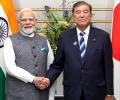
Prime Minister Shigeru Ishiba's sudden resignation after only a year in office has thrown Japan into political turmoil, raising doubts about how the country will handle economic and regional challenges, observes Dr Rajaram Panda.

An increase in the farmer income support scheme PM Kisan Nidhi, the introduction of a 'robot tax' to fund reskilling of people who lose their jobs to artificial intelligence (AI), and a reduced income-tax (I-T) to bring relief to the middle classes - these are some of the items in the Budget wish list submitted by Sangh Parivar affiliates to Finance Minister (FM) Nirmala Sitharaman. Representatives of the affiliates of the Rashtriya Swayamsevak Sangh (RSS), such as the farmer organisation Bharatiya Kisan Sangh (BKS); trade union Bharatiya Mazdoor Sangh (BMS); Laghu Udyog Bharati, which works for micro and small industries; and Swadeshi Jagran Manch (SJM), which works on economic and policy issues, met the FM and other officials over the last couple of weeks as part of the pre-Budget consultations.
'We believe that in the new world order FTAs or bilateral trade agreements (BTAs) are the way forward.' 'They are enablers for our participation in global value chains. Today, around 70 per cent of global trade is tied to these chains.'
The official said there are both challenges and opportunities for India as many of its competitor countries in exports, such as China Vietnam, Bangladesh, Cambodia and Thailand, face higher duties.

'We need to be very vigilant as we are passing through some fraught times.'

In a significant policy announcement from the Oval Office, President Donald Trump has declared a 25 per cent tariff on all imported vehicles entering the United States, a move he described as "very exciting" for domestic manufacturing. The tariffs, set to take effect on April 2, will impact nearly half of all vehicles sold in the United States, including American brands assembled overseas.
'Due to tariff uncertainty, automotive customers reduced their steel uplift by almost 15 per cent.'

Trump's method are more destabilising than his policy. So, a good idea these couple of years is to sip Kool-Aid, and savour the joys of Trumplomacy, asserts Shekhar Gupta.
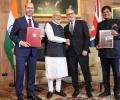
'That way you're not hostage just to US sort of exports to India.'

From the Sensex pack, Tata Steel, Zomato, Power Grid, UltraTech Cement, IndusInd Bank, Larsen & Toubro, Adani Ports, NTPC, State Bank of India and Reliance Industries were among the major gainers. On the other hand, Tech Mahindra, Tata Consultancy Services, ITC, Infosys, Sun Pharma, Maruti, HCL Tech, and Nestle were among the laggards.

The Foxconn move may have been prompted by the Chinese government's focus on strengthening its supply chain.

Marico reported consolidated revenue growth of 20 per cent year-on-year (Y-o-Y) during the January-March quarter (Q4) of FY25. Domestic revenue surged 23 per cent Y-o-Y, while volume growth was 7 per cent. International growth stood at 11 per cent (16 per cent in constant currency growth).

Anticipating US action on tariffs, India seems to have made the first move by revamping its tariff structure by reducing the slabs to eight rates, points out Mukesh Butani.
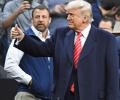
Trump is confident the US will eventually emerge the winner from whatever turmoil his policies cause, notes T T Ram Mohan.

Moody's Ratings on Wednesday said US tariffs will weaken credit conditions and raise defaults risks especially for low-rated and speculative grade corporates. It said that an unpredictable US trade policy will lead to a deterioration in global credit conditions and macroeconomic impact will slow growth with a growing possibility of recession.

The Centre is unlikely to offer new direct tax incentives for units operating in special economic zones (SEZs) and may instead allow the grandfathering of previous exemptions that such units were entitled to, according to proposed amendments to the SEZ Act, 2005, people aware of the matter said. The amendments, proposed by the commerce department, will soon be considered by the Cabinet for approval. This represents a departure from the department's earlier plan to introduce these changes through the Development Enterprises and Services Hubs (DESH) Bill, 2023, which faced strong criticism from the ministry of finance.
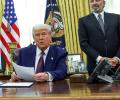
An hour before his bilateral meeting with Prime Minister Narendra Modi, Trump again commented on India's tariff structure, saying 'they have the highest tariffs' and 'it is a hard place to do business'.
